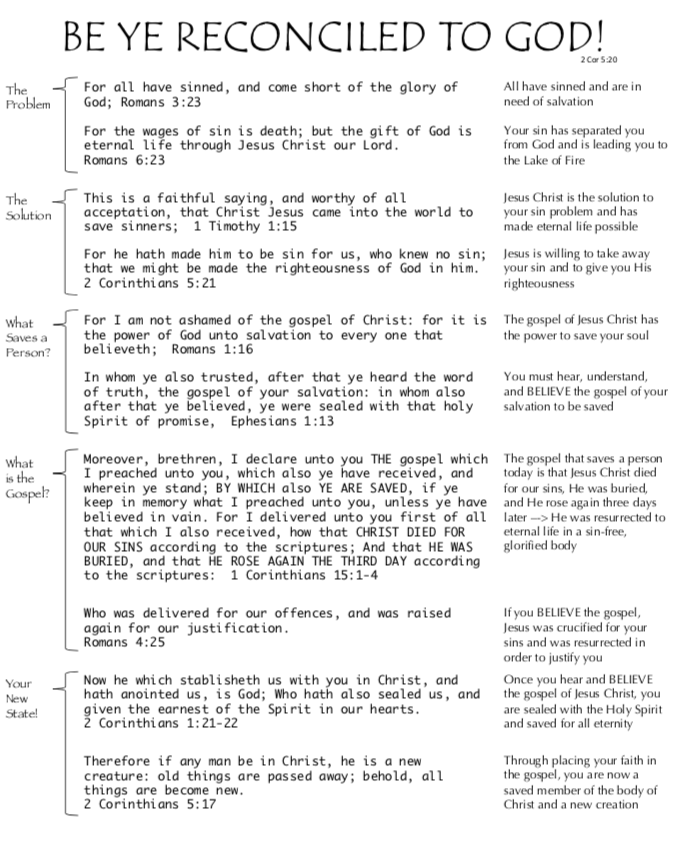
I present to you Exhibit A:
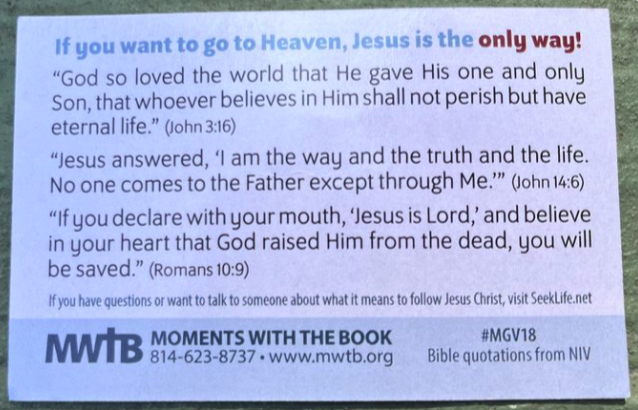
Key Distinctions
I would like to emphasize two key subjects that most who call themselves “Christian” have been trained not to recognize:
❇️ The Gospel of the Kingdom
(Pre-Paul, preached during Jesus’ earthly ministry and early Acts, will be preached again after the PreTrib Rapture (Mt 24:14))
Offered primarily to Israel. This gospel involved believing Jesus was the prophesied Messiah/King, repentance, water baptism, and signs/miracles, looking forward to the earthly kingdom that was prophesied to come (Mt 4:17, 23; 10:5-7; Mk 1:15; Acts 2-3).
John 3:16 and John 14:6 fall here – spoken by Jesus under the Law, before the Cross and Paul’s distinctive revelation.
❇️ The Gospel of the Grace of God
(Revealed first to Paul, discussed in Romans thru Philemon, the gospel that saves today)
For Jews and Gentiles alike within this age of the “mystery” (Eph 3:1-12; Col 1:25-27). Salvation is by grace through faith alone in Christ’s finished work – His death, burial, and resurrection (1 Cor 15:1-4). No water baptism required for salvation, no earthly kingdom offer, no signs and wonders, it involves faith alone. The Body of Christ (the Church) is a new entity, not a continuation of Israel’s program.
Blending these two gospel messages confuses audiences by not emphasizing Paul’s distinctive gospel revealed to him by the Lord from heaven.
Specific Issues with the Tract’s Verses
For God so loved the world, that he gave his only begotten Son, that whosoever believeth in him should not perish, but have everlasting life.
John 3:16
This was spoken by Jesus during His earthly ministry to Nicodemus (a Jew), pre-Cross. It emphasizes belief in the Son for eternal life but does not explicitly mention the Cross, burial, resurrection, or justification by faith apart from works/Law (which is core to Paul’s gospel message).
When we rightly divide the word of truth, we see this as Kingdom gospel truth – insufficient by itself for the Church Age (Eph 3:2) because it lacks the full “mystery” revelation of grace. Paul’s gospel (1 Cor 15:1-4) supplies the “how” (Christ died for our sins according to the Scriptures, was buried, and was resurrected) and to not recognize and believe the gospel that saves today can have eternal consequences…
Jesus saith unto him, I am the way, the truth, and the life: no man cometh unto the Father, but by me.
John 14:6
As true as this statement from our Lord is (a “trans-dispensational” truth), we must also remember that it comes from Jesus’ Upper Room discourse, directed to His Jewish disciples before the Cross. It is absolutely true in a general sense, but it is pre-grace dispensation (Eph 3:2) and it doesn’t detail the mechanism of grace (faith in the finished work of Christ on the Cross) revealed later to the apostle Paul for this age.
The point is, in everything that you do, read, and hear, look for the “death, burial, and resurrection” (DBR) for the complete message of salvation for today.
That if thou shalt confess with thy mouth the Lord Jesus, and shalt believe in thine heart that God hath raised him from the dead, thou shalt be saved.
Rom 10:9
This verse is Pauline, but mountains of confusion have come from it. In context (Romans 9 thru 11), the apostle Paul is talking about Israel and their past election (Rom 9), present rejection (Rom 10), and future salvation (Rom 11).
This verse is often seen as addressing Israel’s national future or calling on the Lord in a broader sense (quoting the prophet Joel). It is often argued to be describing results or public identification rather than the precise content of saving faith for the Church (which is found in believing the gospel of 1 Cor 15:3-4). This verse can be misread as requiring a verbal “work” (confession) alongside belief, which contradicts pure grace.
Leaving your salvation message at “Jesus is the only way!” and a call to “follow Jesus Christ” echoes Kingdom-style evangelism and not Paul’s “mystery” focus on reconciliation by the Cross (2 Cor 5:18-21; Eph 2:8-9).
What to look for within Gospel Tracts during the Dispensation of the Grace of God
✅ A clear representation of 1 Corinthians 15:1-4: The death, burial, and resurrection of Jesus Christ as the gospel by which we are saved today.
✅ An emphasis upon the “mystery,” the Body of Christ, and how one can become a member of that Body through salvation today: Grace reveals a secret withheld within previous ages (Eph 3:1-12; Rom 16:25), but now made known for salvation.
✅ Avoids potential law/works confusion: Mixing pre-Cross verses with the gospel that saves today can imply conditions beyond faith alone. We are saved only by Christ’s finished work on the Cross, not our own.
✅ Knows its audience: Tracts should not apply broadly without distinguishing between Israel and the Church and their respective programs.
Conclusion
Within mainstream Christianity today (most evangelicals, Baptists, etc.), ALL verses found in what is labeled as the “New Testament” apply today for salvation and our doctrine. They believe, for example, that John’s Gospel is fully for the Church, that the ‘churches’ mentioned in Revelation 2&3 are Body of Christ churches, that Romans 10:9 is a classic salvation text, and that there is one gospel throughout the Bible with progressive revelation being at the heart of it.
It is rare when well-intentioned Christians are able to forsake the lenses of tradition, denominationalism, and “staying safe” in what it is that their church teaches. Those who break free are able to recognize the distinctions between dispensations (Law vs. Grace), different “programs” in the Bible (Israel vs. the Body of Christ), different ministries (Peter vs. Paul), different destinations (earthly kingdom vs. heavenly places), and a clarity as to what the gospel is that saves today.
Let us mutually ensure that we communicate the gospel that saves today within our evangelistic efforts: